
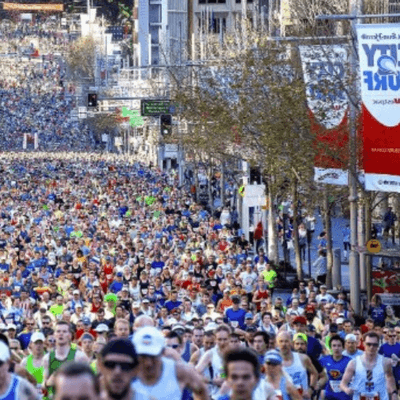
With thousands of Australians preparing to take part in City2Surf this weekend, many runners have been training hard to tackle the 14km course from Sydney’s CBD to Bondi Beach.
You might be aiming for a personal best, running with friends, or taking part for the experience. Either way, running places repetitive demands on the muscles, joints and connective tissues. Understanding how to prepare, recover and respond to aches or pains can help you continue running safely and comfortably.
Running well: what osteopaths assess
Osteopathy is a form of allied health care that focuses on the diagnosis, management and rehabilitation of musculoskeletal conditions. Osteopaths assess how the body’s muscles, joints, nerves and connective tissues are functioning and, where clinically appropriate, may use manual therapy, exercise advice and education as part of an individualised management plan. For runners, an osteopath may assess movement, function and other factors that may contribute to running-related musculoskeletal pain or reduced function.
How osteopathic care may support runners
- Assessment of contributing factors: Osteopaths assess movement, function and other factors that may contribute to running-related musculoskeletal pain or reduced function.
- Movement assessment: An osteopath may assess joint mobility, muscle function and movement patterns as part of an overall musculoskeletal assessment.
- Rehabilitation and recovery: Osteopaths may provide advice on returning to activity following a musculoskeletal injury where clinically appropriate.
- Education and exercise advice: Osteopaths may provide advice on exercise, training and movement based on an individual’s assessment.
Common running-related musculoskeletal conditions
Runner’s knee (Patellofemoral Pain Syndrome)
An osteopath may assess factors contributing to patellofemoral pain, including strength, movement patterns and joint function, and develop an individualised management plan where appropriate.
Shin splints
Management may include manual therapy, exercise advice and education where clinically appropriate.
Plantar fasciitis
Assessment may include the foot, ankle and lower limb to identify factors contributing to heel pain and inform an individualised management plan.
IT band syndrome
Osteopaths may assess movement and muscle function to identify factors contributing to symptoms and recommend appropriate management.
When to see an osteopath as a runner
If you experience persistent pain, recurring injuries, or feel that your mobility is restricted, seeing an osteopath may help address underlying issues before they become major problems. An osteopath may discuss and advise on load management and training volume which may be contributing to injury or lack of recovery.
This article has been adapted by Osteopathy Australia for What is Osteo. It was originally published by Alana Parry at Osteoflow, an Osteopathy Australia member.
You can find an Osteopathy Australia osteopath near you using the Find an osteo directory.